
Intro To Art
Bearing Witness , Part 2
As we talked about in the first class, most art can be said to be an act of bearing witness to one or more of the following:
- the life of the artist or an important person
- the artist’s society or culture
- an important historical event
- something unique about the artist’s personal experience/vision
QUESTIONS
1. Info about work; artist, title, medium, dimensions, date.
2. What person, idea, culture, story, or unique vision is the maker of this work attempting to bear witness to?
3. How does the artist communicate this story visually?
4. How was the work made? What are the materials,the process used? What came first,second, third…?
5.How do the materials or manner in which they are applied help the artist tell his/her visual story especially well?
6. What other thoughts do you have about the work?
ANSWERS:
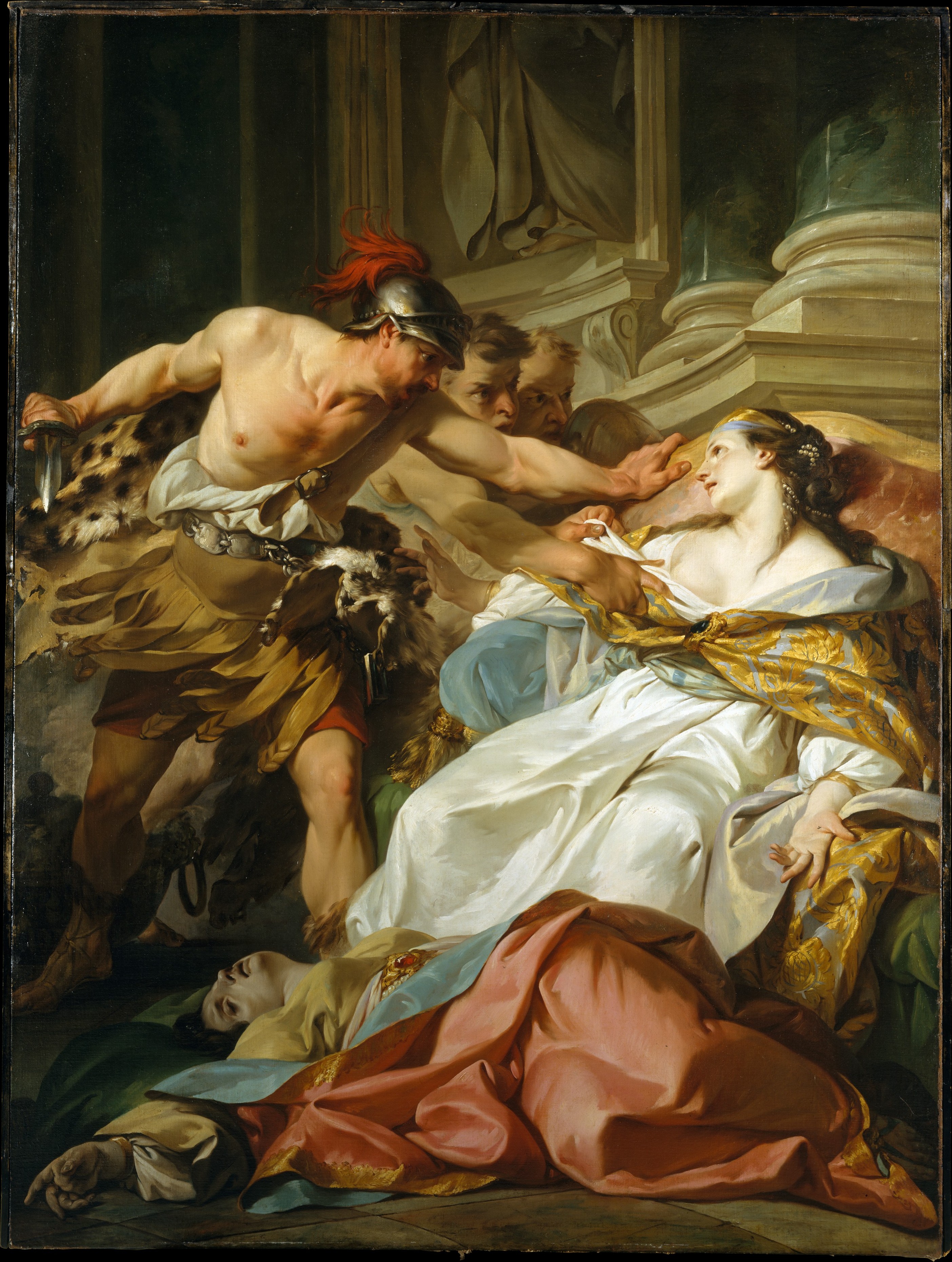
Artist : Jean-Baptiste Marie Pierre (French, Paris 1714–1789 Paris)
Title : The Death of Harmonia
Medium : Oil on canvas
Dimensions : 77 1/2 x 58 1/4 in. (196.9 x 148 cm)
Date : ca. 1740–41
Jean wanted to bear witness to the death of Harmonia, the daughter of King Gelon II of Syracuse and her bravery.This painting depicts that the Princess Harmonia risked her death at the hands of the conspirators who had already killed other members of her family. Her governess tried to save her by exchanging her clothes with the princess as she dressed herself in the princess clothes. So, she was murdered in her place. However, instead of escaping, moved by the governess courage, Princess Harmonia reveals her identity and was assassinated. In this painting, the slave woman's dead body was lying near her feet. The assassin were grasping their dagger violently that will eventually cause the death of Princess Harmonia.
The Painting was drawn realistically. The white draperies worn by Princess on the armchair depicts the young greek and roman women in 214 B.C. In addition, the dead body of the governess was drawn realistically with her discolored face, eyes closed and lying lifeless at the feet of Princess Harmonia. The princess was drawn very large which helps us to emphasis on the courage, bravery she had while facing her assassins. Also, the anger in the eyes of the soldier, with their daggers out as they were going to kill Princess Harmonia.
The oil on the canvas with different colors helped to depict the paintings more realistically.
The reason i chose this art work is because i felt the strong sense of women's courage in this painting. The Courage of the governess to protect her Princess Harmonia despite knowing that she will die in her place. In addition, Princess Harmonia's courage to reveal her identity while facing the assassins which led to her death.

Utamaro wanted to bear witness to the Multiple activities done by the both mother(a geisha) and the child. In Japan, during the Edo period, geisha became a part of the japanese culture. This print depicts the mother fixing her coiffure infront of the mirror as well as breastfeeding her child who is sucking his mothers nipple, pinches her other nipple with his hand while trying to reach for the toy that is offered by the other women at the back.
The artist communicate this story visually by the polychrome woodblock print with the ink and the color on the paper. The colors and the ink shows the makeup of the women which indicates that she is a mother who is working as a geisha . The gazes and the gestures depicts the humor of the image.
The work was made with polychrome woodblock print using ink and color on the paper.
The materials and the manner in which the woodblock print, the ink , the paper used has helped to preserve the color of the print very well.
The reason i chose this artwork is because i felt that behind the humor of the artist, he is trying to depict the struggle of the japanese woman/mothers to make a living so that she could feed her child and families. In contrary, a mother is someone who has to nurture her baby all throughout the day but instead to have her child a better future, she works as a geisha where she does not even have the enough time to breastfeed her child properly. Leaving the child while she goes to work.
“The mosque is the abode of the pious.” Though i do not understand the inscriptions but it was written beautifully.
Title : The Death of Harmonia
Medium : Oil on canvas
Dimensions : 77 1/2 x 58 1/4 in. (196.9 x 148 cm)
Date : ca. 1740–41
Jean wanted to bear witness to the death of Harmonia, the daughter of King Gelon II of Syracuse and her bravery.This painting depicts that the Princess Harmonia risked her death at the hands of the conspirators who had already killed other members of her family. Her governess tried to save her by exchanging her clothes with the princess as she dressed herself in the princess clothes. So, she was murdered in her place. However, instead of escaping, moved by the governess courage, Princess Harmonia reveals her identity and was assassinated. In this painting, the slave woman's dead body was lying near her feet. The assassin were grasping their dagger violently that will eventually cause the death of Princess Harmonia.
The Painting was drawn realistically. The white draperies worn by Princess on the armchair depicts the young greek and roman women in 214 B.C. In addition, the dead body of the governess was drawn realistically with her discolored face, eyes closed and lying lifeless at the feet of Princess Harmonia. The princess was drawn very large which helps us to emphasis on the courage, bravery she had while facing her assassins. Also, the anger in the eyes of the soldier, with their daggers out as they were going to kill Princess Harmonia.
The oil on the canvas with different colors helped to depict the paintings more realistically.
The reason i chose this art work is because i felt the strong sense of women's courage in this painting. The Courage of the governess to protect her Princess Harmonia despite knowing that she will die in her place. In addition, Princess Harmonia's courage to reveal her identity while facing the assassins which led to her death.
ART#2
Title: Mother and Child
Artist : Kitagawa Utamaro (Japanese, 1753?–1806)
Period: Edo period (1615–1868)
Medium: Polychrome woodblock print; ink and color on paper
Dimensions: H. 14 5/8 in. (37.1 cm); W. 10 in. (25.4 cm)
Classification: Prints
Date: ca. 1793
Culture: Japan
Artist : Kitagawa Utamaro (Japanese, 1753?–1806)
Period: Edo period (1615–1868)
Medium: Polychrome woodblock print; ink and color on paper
Dimensions: H. 14 5/8 in. (37.1 cm); W. 10 in. (25.4 cm)
Classification: Prints
Date: ca. 1793
Culture: Japan
Utamaro wanted to bear witness to the Multiple activities done by the both mother(a geisha) and the child. In Japan, during the Edo period, geisha became a part of the japanese culture. This print depicts the mother fixing her coiffure infront of the mirror as well as breastfeeding her child who is sucking his mothers nipple, pinches her other nipple with his hand while trying to reach for the toy that is offered by the other women at the back.
The artist communicate this story visually by the polychrome woodblock print with the ink and the color on the paper. The colors and the ink shows the makeup of the women which indicates that she is a mother who is working as a geisha . The gazes and the gestures depicts the humor of the image.
The work was made with polychrome woodblock print using ink and color on the paper.
The materials and the manner in which the woodblock print, the ink , the paper used has helped to preserve the color of the print very well.
The reason i chose this artwork is because i felt that behind the humor of the artist, he is trying to depict the struggle of the japanese woman/mothers to make a living so that she could feed her child and families. In contrary, a mother is someone who has to nurture her baby all throughout the day but instead to have her child a better future, she works as a geisha where she does not even have the enough time to breastfeed her child properly. Leaving the child while she goes to work.
ART#3
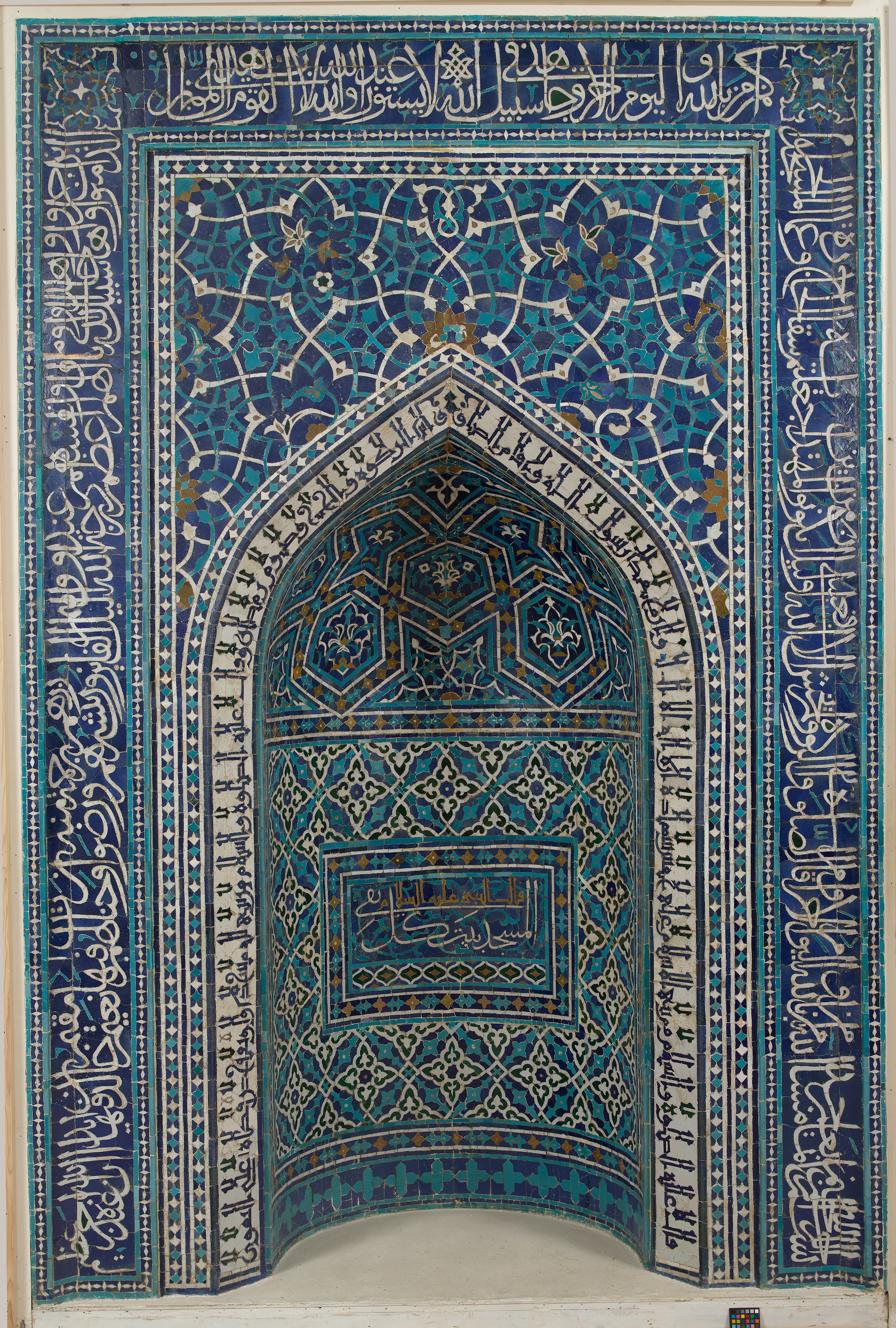
Title: Mihrab (Prayer Niche)
Object Name:Mihrab
Date:A.H. 755/A.D. 1354–55
Geography:Iran, Isfahan
Culture:Islamic
Medium:Mosaic of polychrome-glazed cut tiles on stonepaste body; set into mortar
Classification:Ceramics
Dimensions:135 1/16 x 113 11/16in. (343.1 x 288.7cm) Storage box: 99 x 41 1/2 in. (251.5 x 105.4 cm) Wt. 4,500 lbs. (2041.2 kg)
The work is bearing witness to the prayer niche built by the Islamic people on the Quibla wall of a theological school in Isfahan, now known as the Madrasa Imami, built just after the collapse of the Ilkhanid dynasty. This is also one of the finest mosaic tilework with the religious inscriptions on it. It is one of the most significant religious architectural decoration.
The architect built the tilework with details, colors, used ceramics, glazing on the mosiac tilework. It also has religious inscriptions in Arabic in kufic script framing the niche.
The work was made with so much details as they need to put up the mosaic of polychrome-glazed cut tiles on the stonepaste body and set in mortor which takes many days to complete it.
The arabic inscriptions on the mihrab and the way the prayer was built depicts the religious architectural decoration. Such decorations helps us to be awe of the detailed work they put to create this beautiful wall. The inscriptions in Arabic in kufic and thuluth scripts at center of niche says
قال النبي علیه الصلوة والسلام/ المسجد بیت کل تقي means
The Prophet, blessings and peace be upon him, said: “The mosque is the abode of the pious.” Though i do not understand the inscriptions but it was written beautifully.
I chose this art work because i felt that the mihrab was built beautifully as well as it shows an religious background with the inscriptions on it. The mihrab is futher stating the believe of the islamic people who believes in prophet Muhammed, the messenger of god who said that whoever built a mosque for god, even the smallest size will be given a palace built by the god in the paradise for him.

No comments:
Post a Comment